

The Second Harvard–EdUHK–Stanford Joint Symposium on Emerging Technologies and Future Talent Held at EdUHK
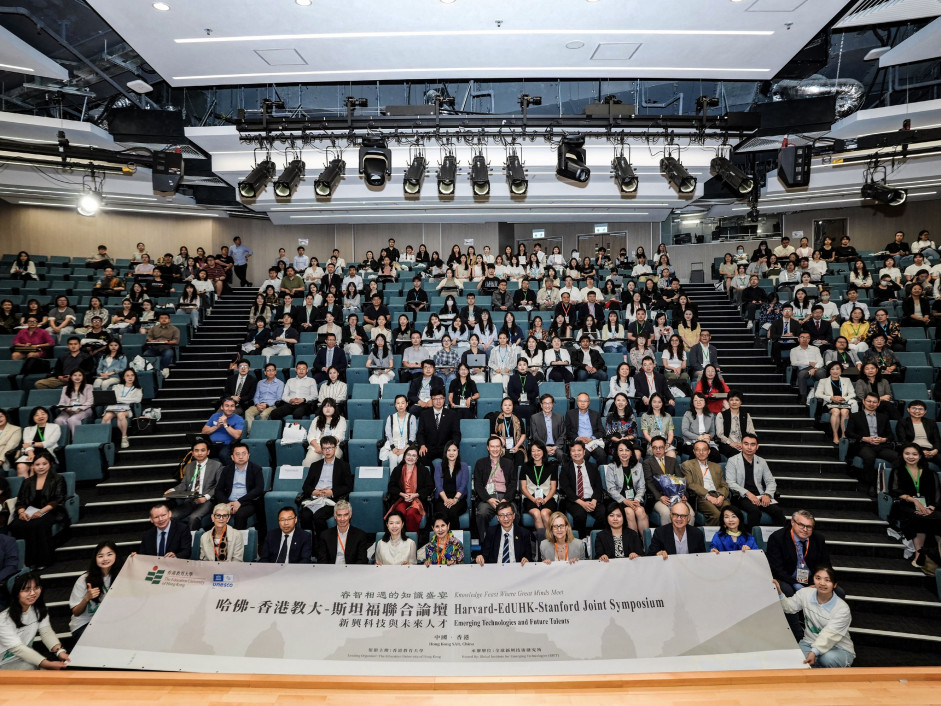
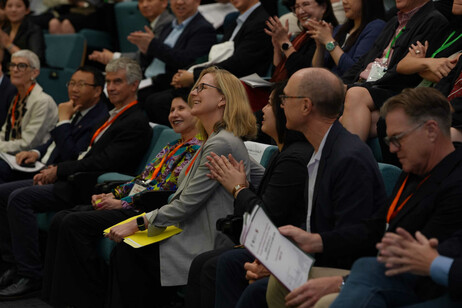
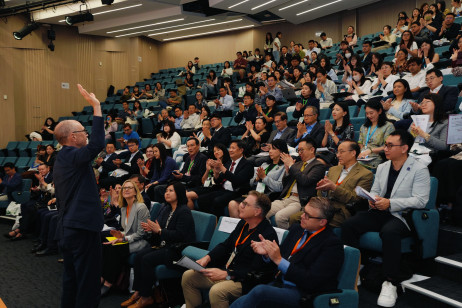
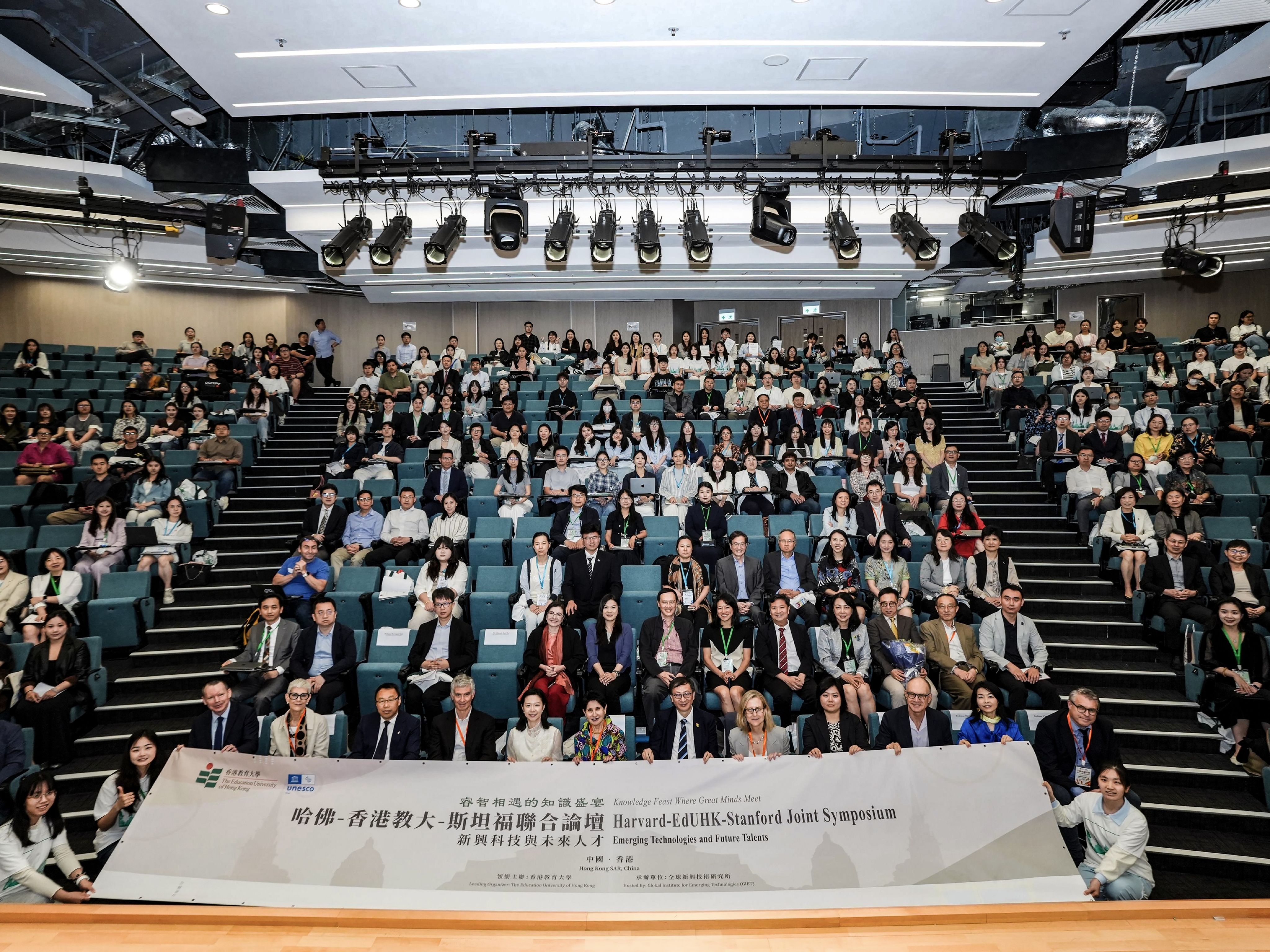
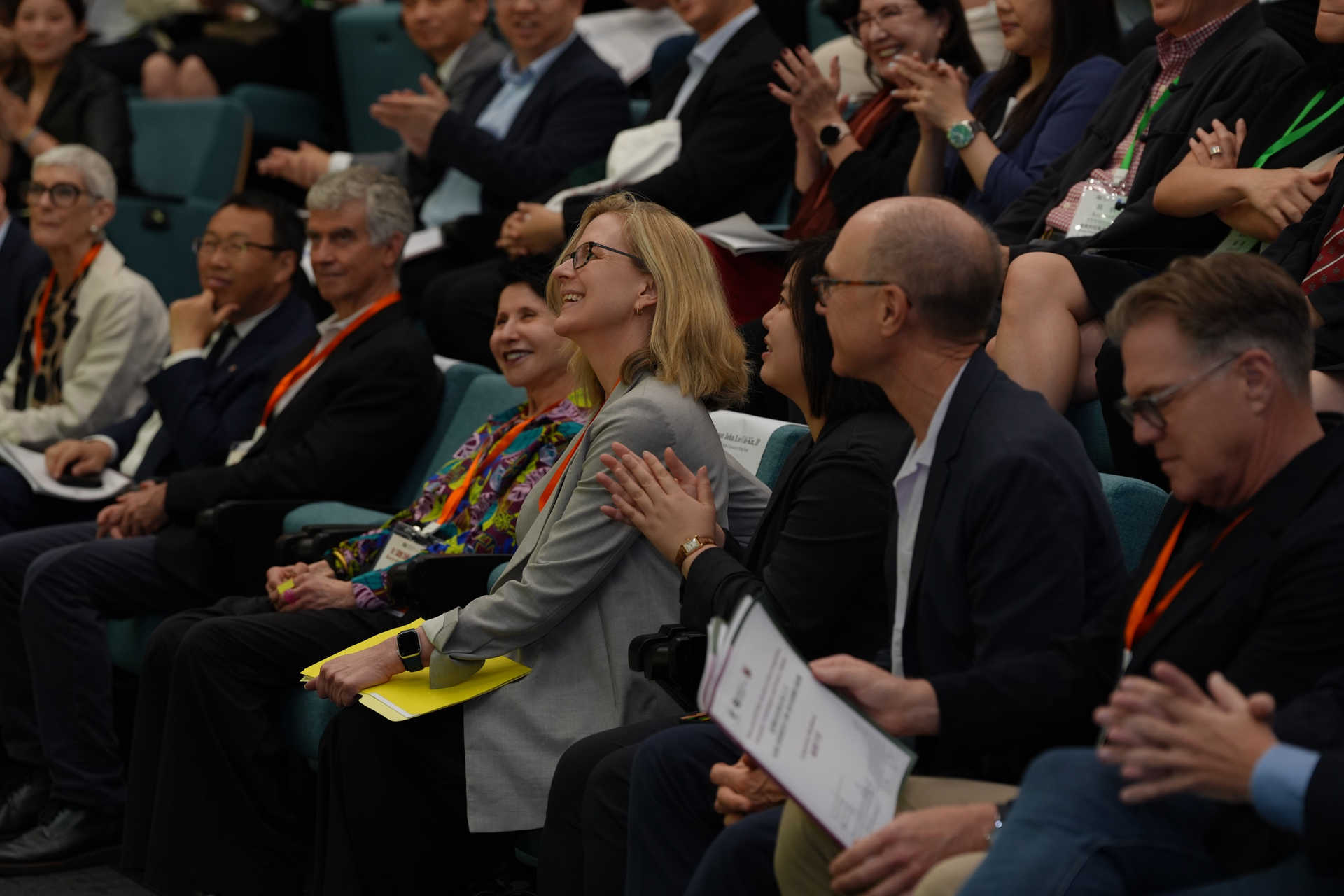
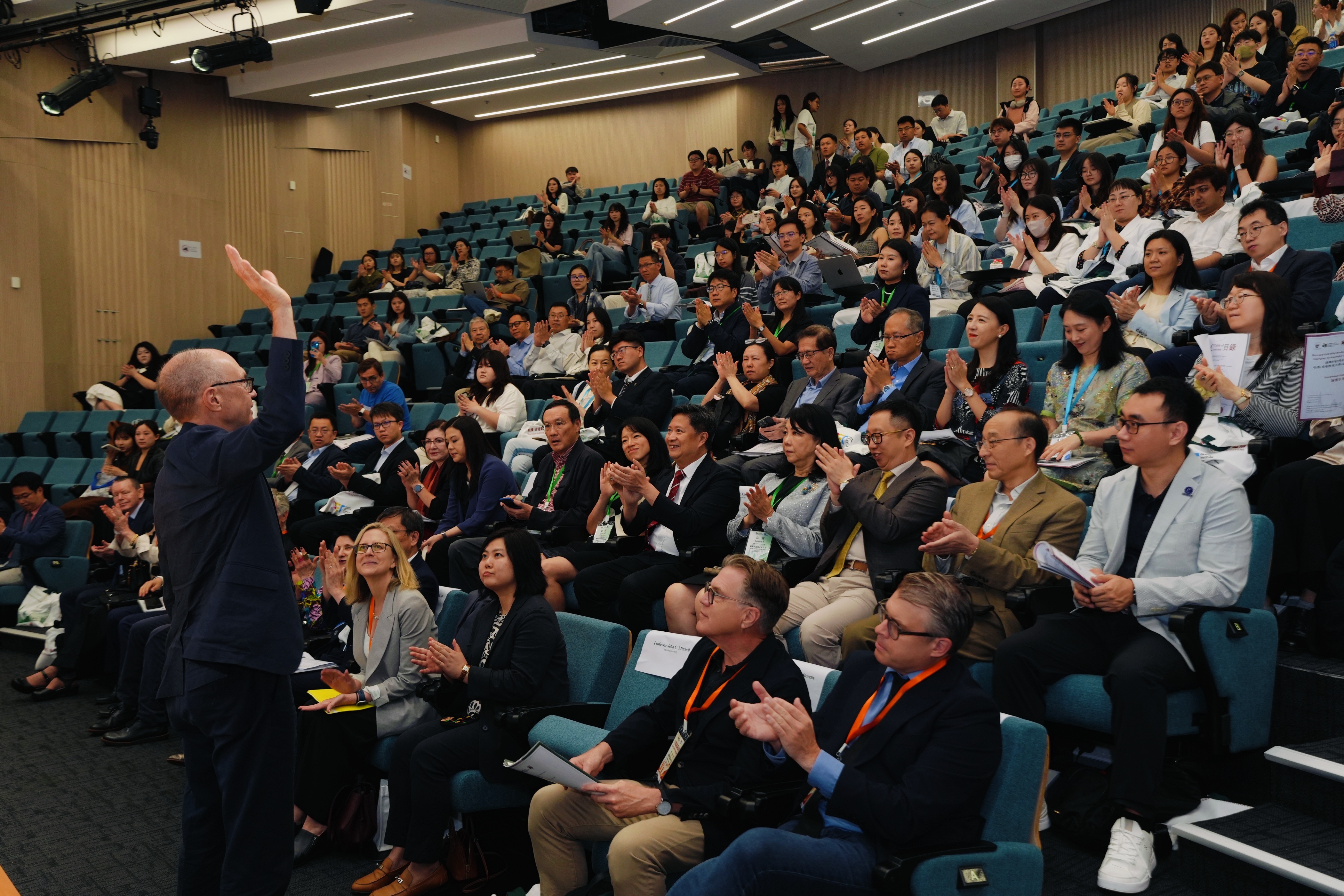
Building on the success and strong momentum of the inaugural Harvard–EdUHK–Stanford Joint Symposium last year, The Education University of Hong Kong (EdUHK) hosted the second Joint Symposium on Emerging Technologies and Future Talents on its Tai Po campus on 15 and 16 May. Supported by representatives from Harvard University and Stanford University. The event brought together over 300 scholars, innovators and practitioners from more than 10 countries and regions to chart bold new directions at the intersection of education, technology, and talent development.
Apart from thought leaders from Harvard and Stanford, this two-day symposium welcomed distinguished scholars from leading institutions including the Massachusetts Institute of Technology (MIT), Yale University, Peking University, and University of Macau. Experts spanning legal education, data science, artificial intelligence (AI), the arts and humanities, entrepreneurship education and creative media shared insights on how AI intersects with diverse disciplines, reshaping interdisciplinary collaboration and driving innovation.
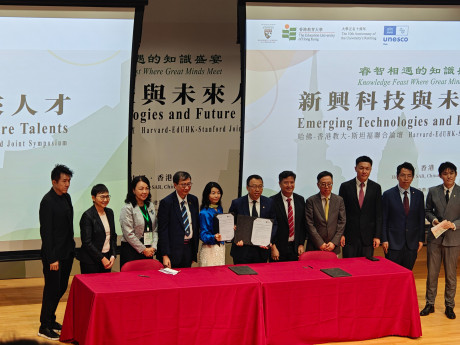
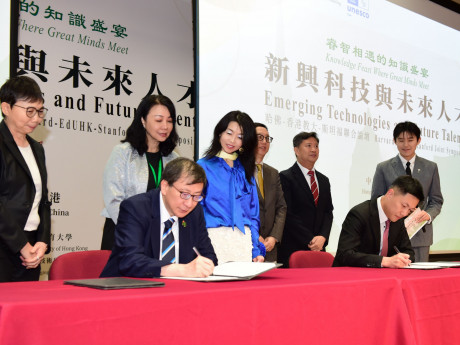
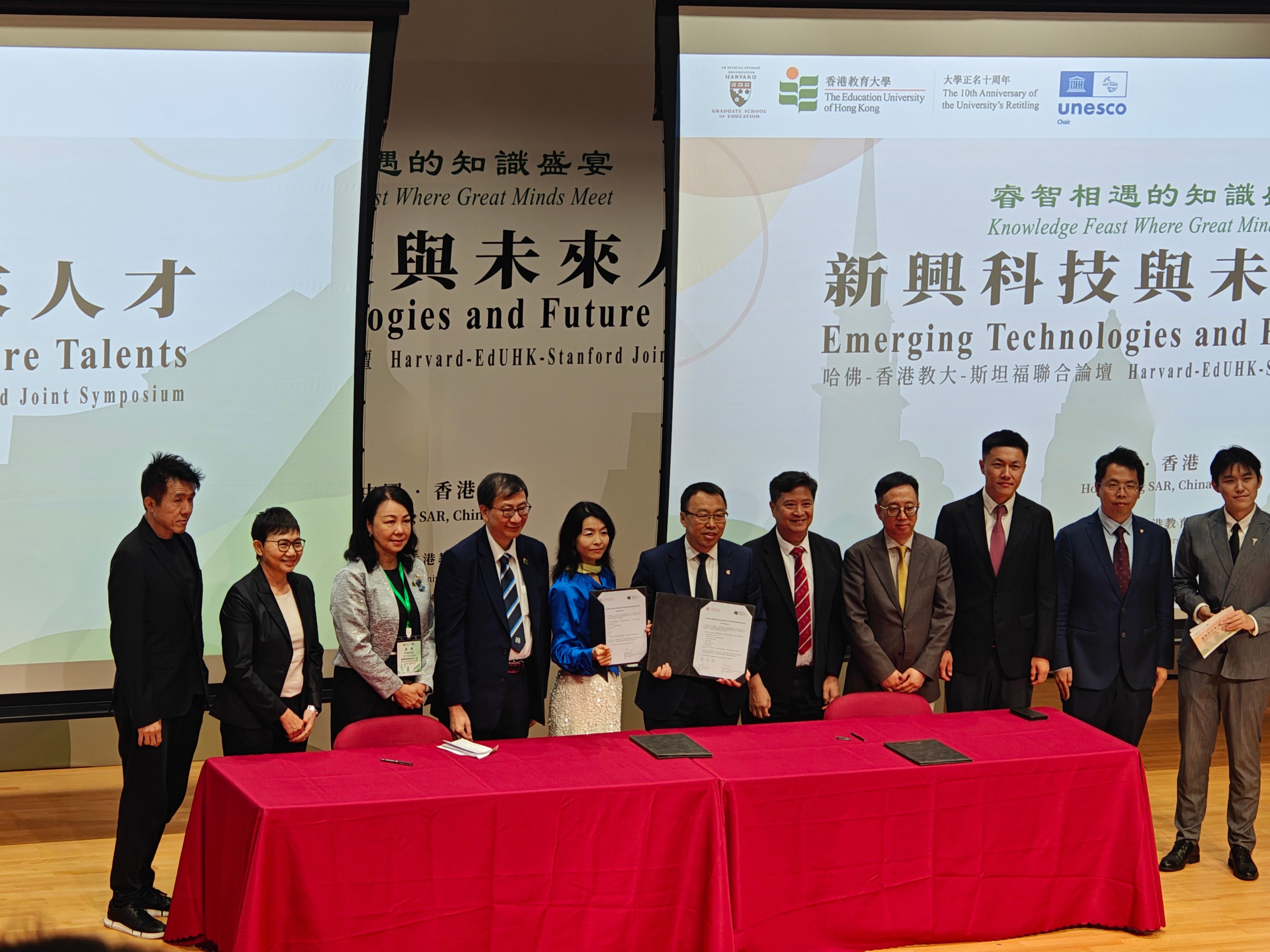
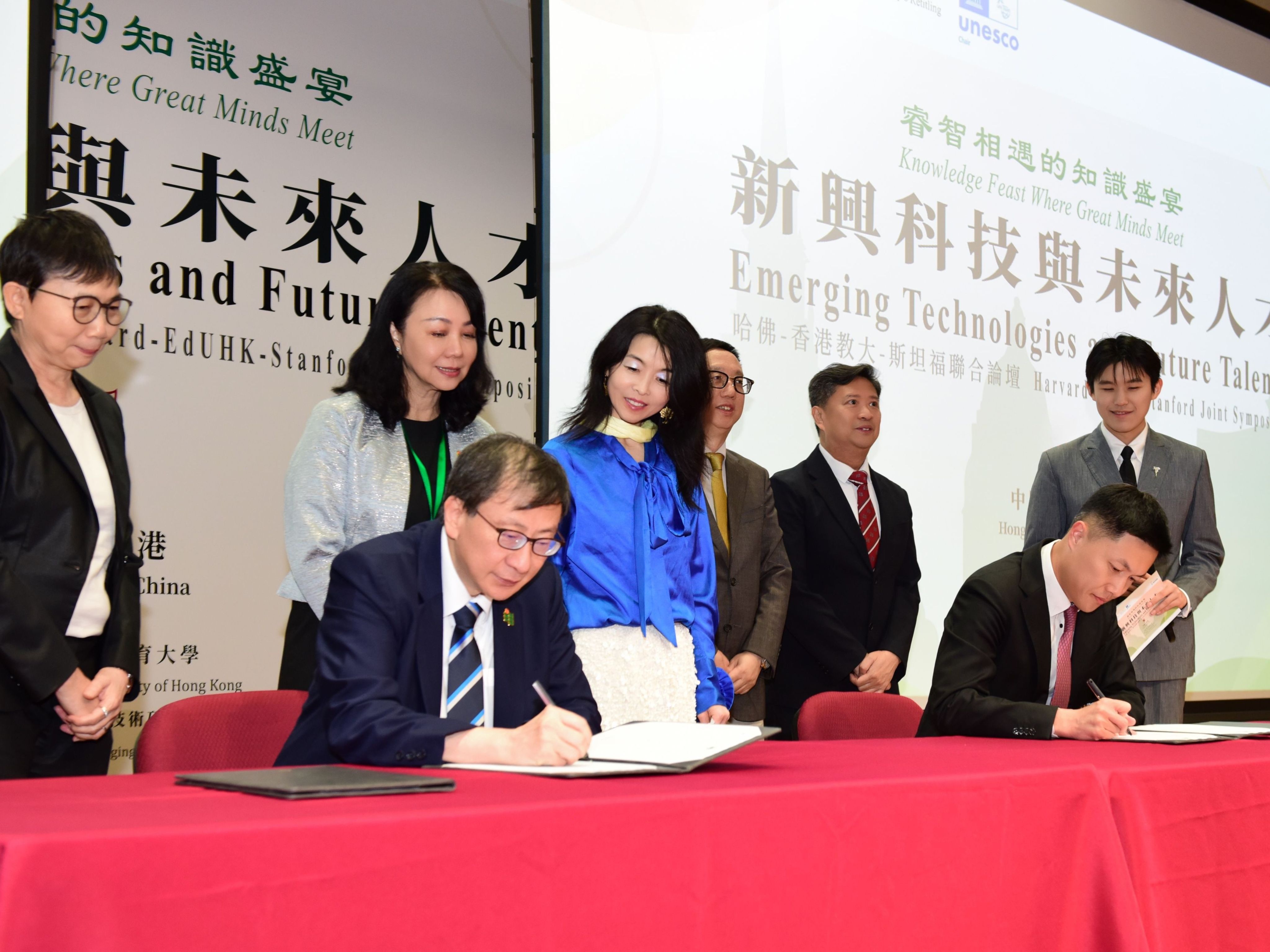
The symposium also marked the establishment of new collaborations between EdUHK and two Chinese Mainland institutions. The University’s Academy for Applied Policy Studies and Education Futures (AAPSEF) signed Memoranda of Understanding with the International College of Football at Tongji University, and KoGuan Law School at Shanghai Jiao Tong University. These partnerships aim to advance AI applications in law and sports, foster faculty and student exchanges, and nurture future leaders — from legal scholars to Olympic athletes — while supporting the long-term development of Chinese football and innovative models of talent training.
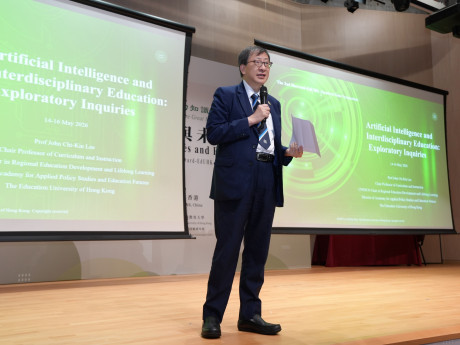
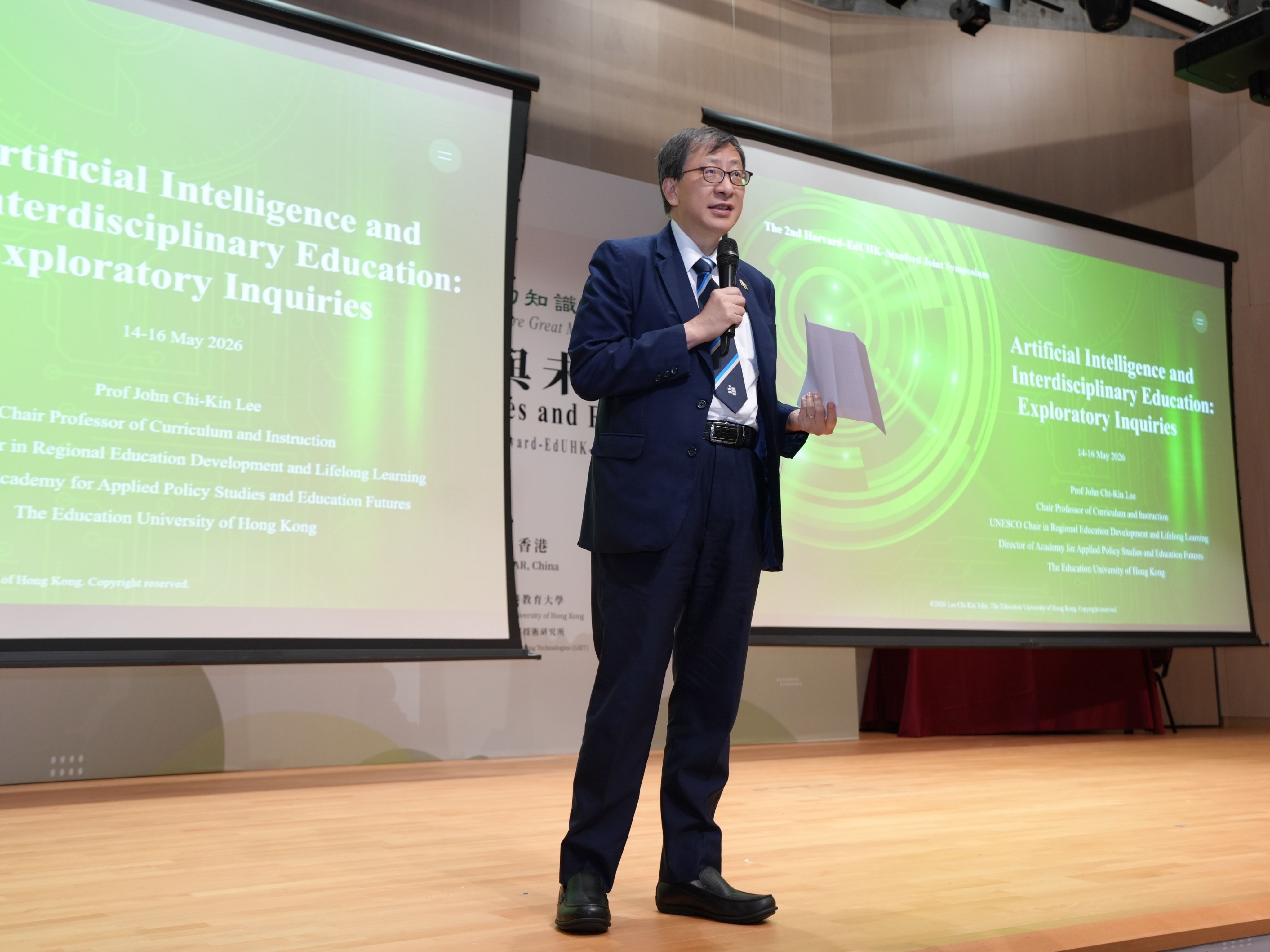
In his opening remarks and keynote speech, Professor John Lee Chi-Kin, President of EdUHK, said, “While AI and emerging technologies are reshaping the educational landscape at an unprecedented pace, unlocking new possibilities for personalised learning, interactive pedagogy and educational innovation, our mission goes far beyond technological adoption. At EdUHK, we believe that the more ‘high-tech’ our world becomes, the more ‘high-caring’ and humanistic our education must be. Central to our vision is Positive and Values Education, through which we cultivate future-ready students with proper values and attitudes.”
Professor John Clifford Mitchell, former Vice Provost for Teaching and Learning at Stanford and core member of the Symposium organising committee, said generative AI and emerging technologies can help bridge the gap between conventional educational tools and innovative approaches. He noted that such technologies hold great potential to reshape teaching and learning, foster deeper student engagement, and support the development of future talents with creativity, critical thinking, and ethical awareness.
EdUHK Vice President (Academic) Professor May Cheng May-hung warmly introduced keynote speakers for the afternoon of Day 1, “This symposium is more than just a gathering of experts. It is a platform for meaningful exchange, global collaboration and shared vision. It brings together top scholars to explore how emerging technologies and AI can shape the future of education, legal education and learning innovation.”
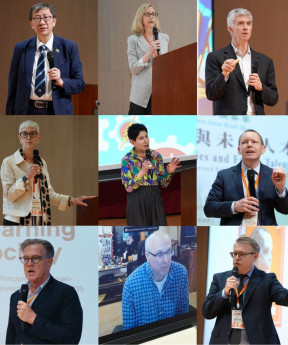
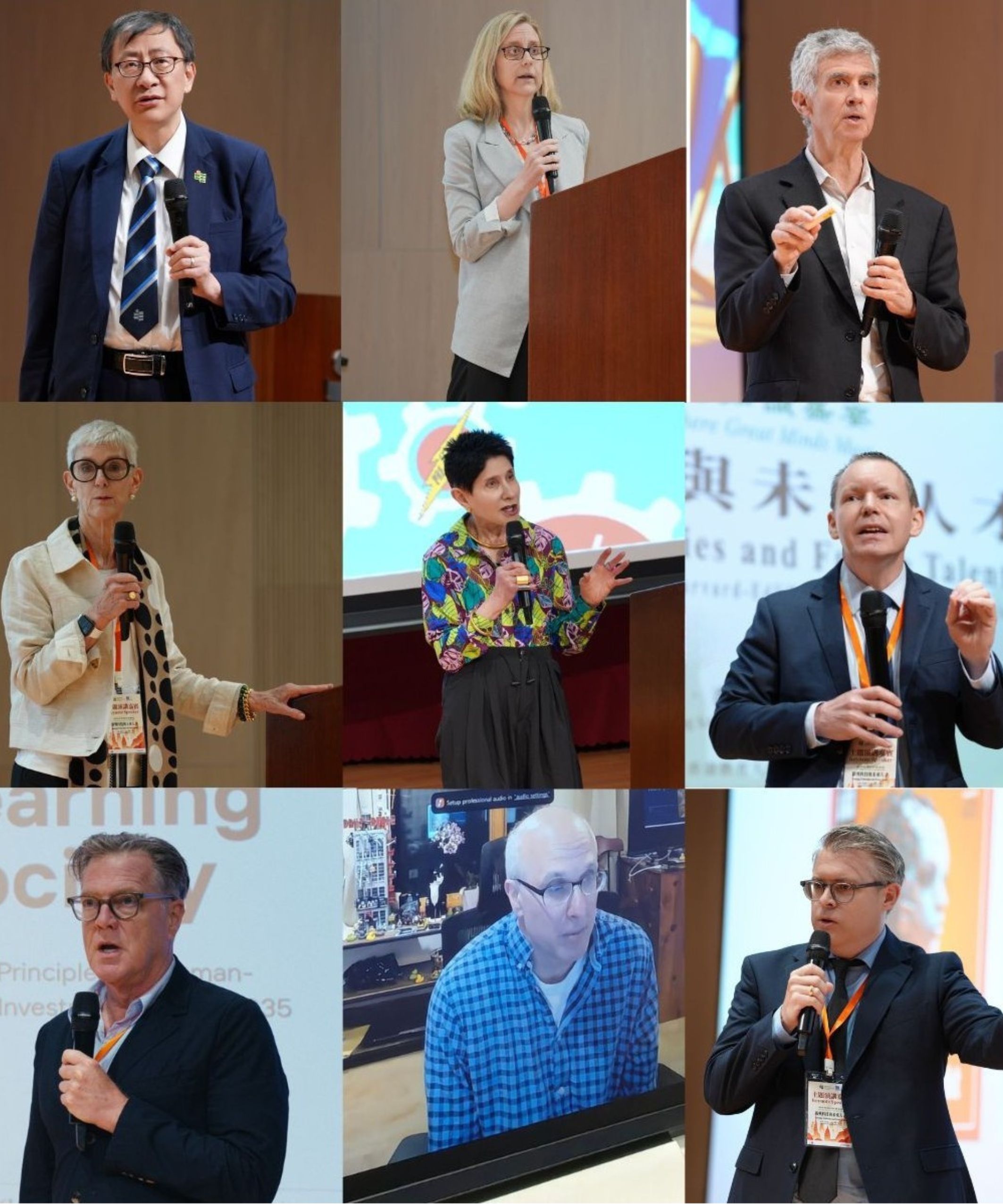
The programme of Day 1 featured seven keynote speeches. Professor Amanda Claybaugh from Harvard shared a case on the application of generative AI in the University; Professor John Lee Chi-Kin reflected on the connection between AI and interdisciplinary education. He noted that AI can dynamically modulate tone and depth while tracking learner growth over time; while Professor Daniel Schwartz, Dean of Graduate School of Education from Stanford, illustrated two paths for AI in education-- automation and augmentation.
Professor Jamie Horsley from Yale University discussed deploying legal reasoning to interrogate AI output. Professor Doris Sommer from Harvard advocated shifting education from competition to collaboration, cultivating active citizens and driving social change through joyful, rigorous, art-centred pedagogy. Professor Mark Feldman from Peking University remarked that legal education should responsibly embrace AI to nurture creative and competent professionals, while striking a balance to preserve students’ independent abilities. Professor Christian Montag from the University of Macau shared a psychological perspective on AI's impact on society.
On the second day, in his opening remarks, EdUHK Vice President (Research and Development) Professor Chetwyn Chan Che-hin said, “We are now in a new era of global technological and educational transformation. Ultimately, global competition and cooperation all boil down to talent development. Education must align itself with international trends, striving to nurture future talents with global vision, sound ethics, creative thinking and adaptive competence.”
Day 2 featured two keynote speeches and six parallel sessions. Professor Eric Klopfer from MIT delivered an engaging presentation via Zoom, in which he explored his research on the ways artificial intelligence may shape children’s cognitive development and proposed strategies to foster responsible integration of AI in education, ensuring that technological innovation supports healthy learning and growth. Professor Mitchell Stevens from Stanford highlighted how the erosion of the schooled society is unlocking new, flexible ways for people to flourish across longer lives. Parallel sessions covered areas in Arts and Creativity in the Age of AI, Impacts of Emerging Media Technologies, Data-Driven Strategies in Future Education, AI and Legal Education, and Science and Technology Research.
Collectively, these talks underscored AI’s transformative influence across education, business, law, and cultural production, fostering new pathways for interdisciplinary collaboration and innovation. The event also featured industrial exhibitions from leading AI and robotics companies (iFLYTEK, Baidu, Mastersound), close to 50 poster presentations, and showcases of achievements from researchers, developers and designers worldwide.
In their closing remarks, EdUHK Assistant Vice President (Interdisciplinary Studies and Partnership) Professor Wang Minjuan and Assistant Vice President (Regional Outreach) Professor Philip Li Hui, co-chairs of the organising committee, emphasised that the dialogues sparked here will not end with the symposium, but will continue to inspire bold partnerships, creative breakthroughs and ethical leadership in the years ahead. With its interdisciplinary spirit and forward-looking vision, the symposium set the stage for reimagining how AI can empower the next generation of talent worldwide.
-Ends-
The Second Harvard–EdUHK–Stanford Joint Symposium on Emerging Technologies and Future Talent Held at EdUHK
Download all images